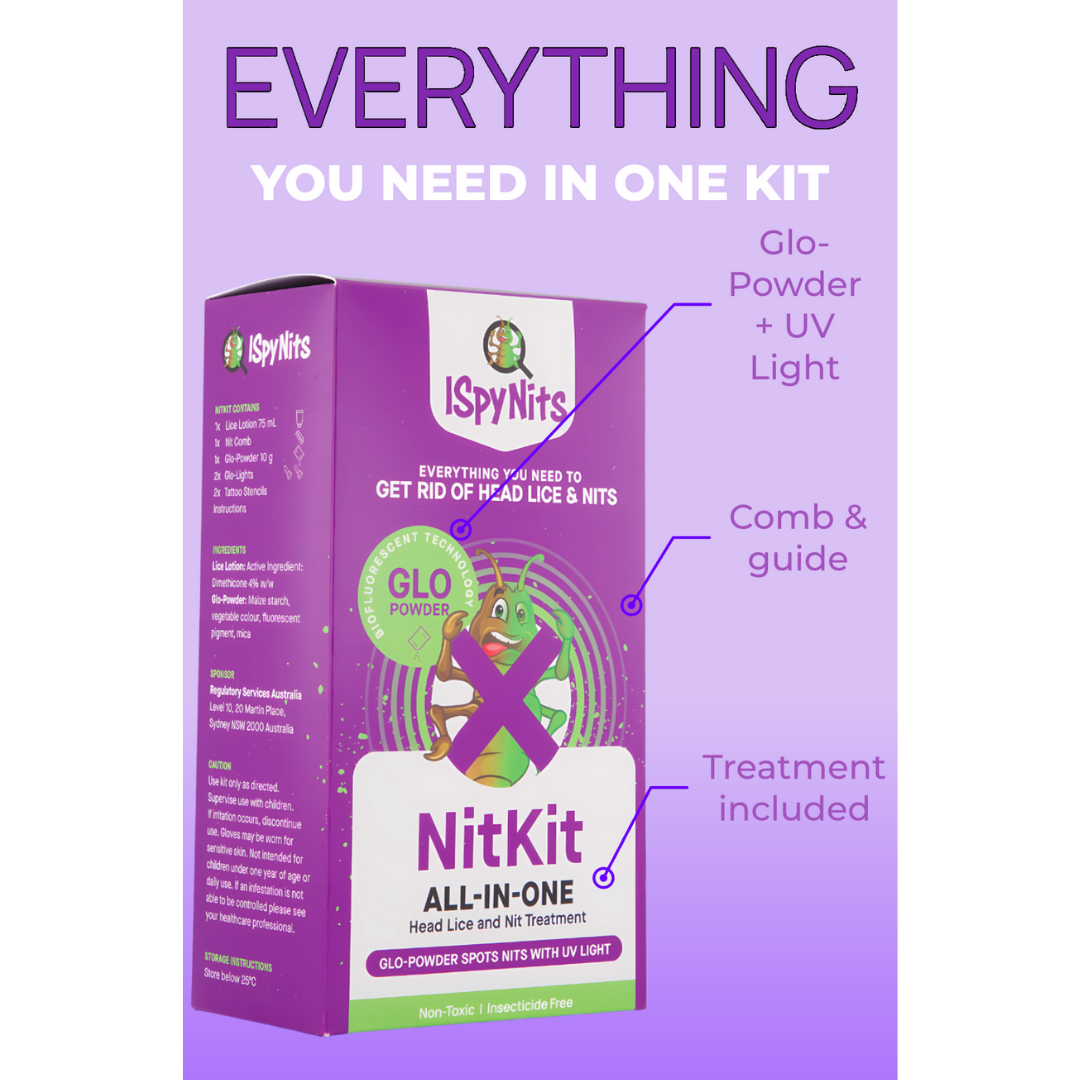
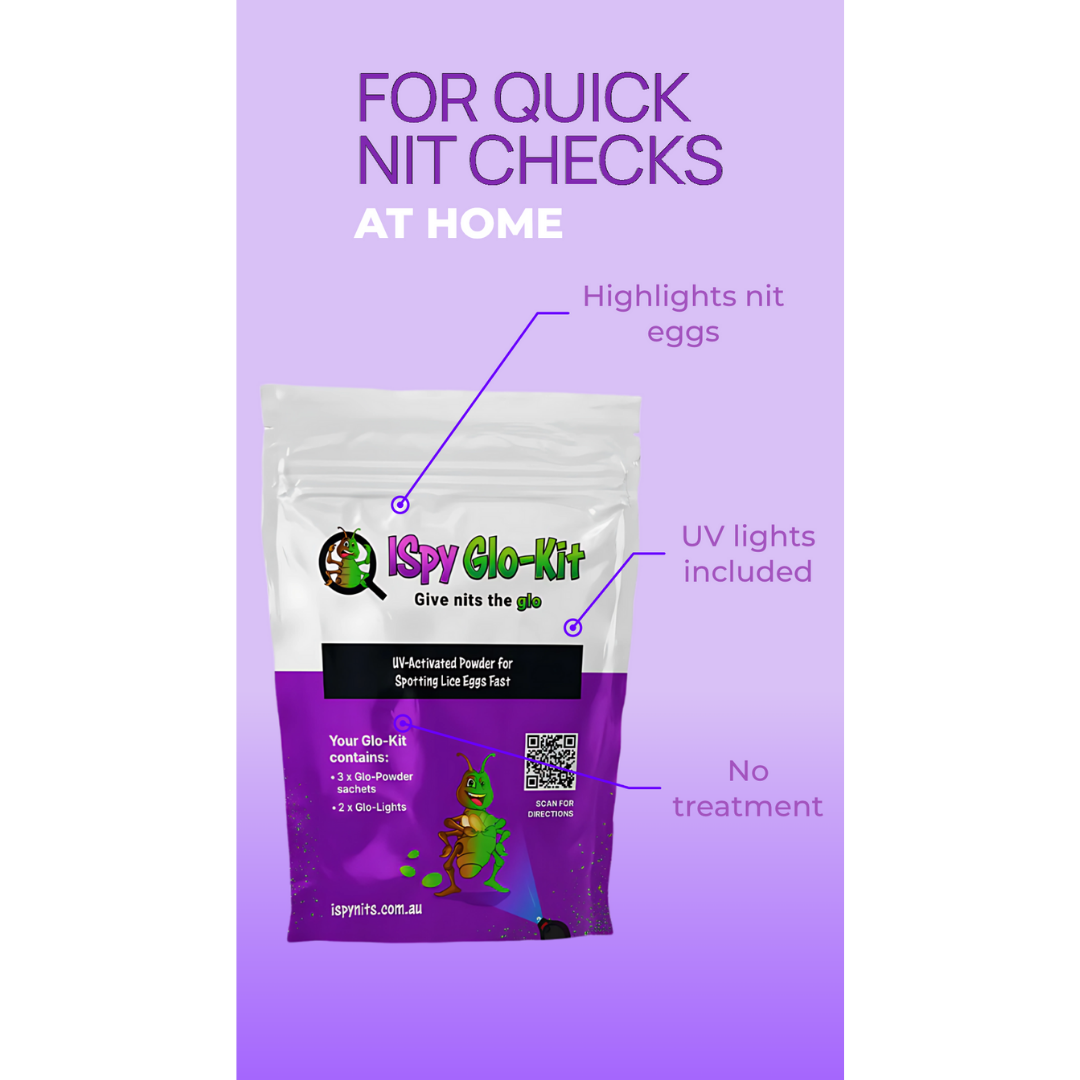


ISpyNits is available at over 250 pharmacies across New Zealand and Australia, including Unichem, Life Pharmacy, Bargain Chemist, Terry White and independent pharmacies nationwide. Use the map below to find your nearest stockist.
Improving Head Lice Support in Aotearoa - Report
Download Head Lice Fact Sheet for Schools and Whānau
Current Evidence and Global Insights for Schools and Whānau
Author: ISpy Nits team, December 2025
Contributor insights: Dr Shirley Gordon (Florida Atlantic University) & Katie Shepherd (Shepherd Institute)
Introduction
ISpy Nits CEO and Founder Kate Ricketts recently returned from the United States, where she met with two internationally recognised experts in head lice biology and public health: Dr Shirley Gordon and Katie Shepherd. Their experience spans decades of work with families, schools, and paediatric health providers.
These expert discussions highlighted several critical, evidence-based insights that are not yet widely understood in Aotearoa — and which present meaningful opportunities to improve the comfort, wellbeing, and learning of our tamariki.
1️⃣ Head lice affect children’s health, comfort and learning
Head lice are a health and wellbeing issue, not a hygiene issue.
The itching is caused by louse saliva and paediatric dermatology literature frames chronic itch as a disease in its own right, with strong overlap with pain pathways and significant impact on wellbeing (Schut et al., 2019). Chronic or unrecognised infestations can lead to:
• Poor sleep and daytime tiredness
• Irritability and difficulty concentrating in class
• Headaches
• Secondary bacterial infections from broken skin
• Emotional distress and social anxiety related to stigma (Gordon et al., 2007)
Critically, some children do not itch at all (Chouela et al., 2002) — meaning infestation can continue unnoticed for weeks.
Asthma and allergy considerations
There is emerging evidence that proteins from Pediculus humanus capitis can provoke IgE-mediated nasal and ocular symptoms and may contribute to allergic or respiratory complaints in sensitised children (Muraro et al., 2019; Panagopoulou et al., 2023).
This reinforces that lice should be understood as a legitimate health condition, not merely cosmetic.
“If kids are uncomfortable for weeks — that’s a wellbeing issue.”
- Dr Shirley Gordon
2️⃣ Stigma makes problems worse
Stigma and shame frequently cause children and families to:
• Hide symptoms
• Delay reporting
• Avoid treatment
• Re-enter classrooms contagious
This not only prolongs individual discomfort — it increases spread in the community (Gordon et al., 2007).
Although lice are a community issue, schools are one of the most effective environments to shift this pattern through calm, supportive messaging that normalises weekly checks and early disclosure.
3️⃣ We don’t have seasonal outbreaks — we have seasonal checking
Research shows head lice are present year-round (Burgess, 2014). What looks like “outbreaks” is actually increased detection at times when parents check more often:
• At the start of term
• After school holidays
• When one classroom case triggers attention
The behaviour pattern drives the “spike,” not the biology.
➡ Encouraging regular weekly checks helps stop the cycle of quiet, prolonged infestations.
4️⃣ Fascinating biology — and why it matters for NZ guidance
Recent expert insights reveal key reasons why infestations behave the way they do:
A. Blood type adaptation
Experimental work indicates that once head lice begin feeding on a particular blood type, they feed and reproduce more successfully when they remain on the same blood type. Switching them to a different blood type reduces survival and egg‑laying (Toloza et al., 2010).
This adaptation may help explain why one child in a household can become the ‘frequent case,’ (Gordon, S. — Personal communication, Nov 18, 2025).
On a different blood type they may avoid feeding and die — though fertilised females may still lay a few eggs.
This explains why:
• One child gets lice over and over
• A sibling may never be affected
It is biology, not cleanliness, parenting or socio-economic factors.
B. A single fertilised female can create a full infestation
Head lice mate once and are essentially pregnant for life.
Females lay 6–10 eggs per day and live about 30 days (Heukelbach & Feldmeier, 2004, Shepherd, K. — Personal communication, Nov 18, 2025).
➡ Finding one adult louse is not a one-off — it requires immediate rechecking and treatment.
C. Where lice hide (and why quick looks miss them)
Although lice feed along the front hairline, eggs are usually laid:
• Behind the ears
• At the nape of the neck
Lice flee from light and movement during checks, often scattering toward the crown.
A proper check must therefore include four zones, not just the fringe.
D. Super lice — widespread resistance
“Super lice” are lice that have evolved resistance to common insecticides like pyrethroids (Gellatly et al., 2016). They are not more dangerous — but they are harder to kill using traditional chemicals.
➡ NZ schools and whānau would benefit from updated guidance favouring dimethicone and physical removal approaches recommended overseas.
E. “Designed for survival”
(Learning insights from Lice: How to Survive on Humans — Paramo, 2025)
Head lice have evolved alongside humans for thousands of years, which makes them:
• Skilled climbers who hold their breath & cling tightly when wet
• Dependent on human warmth and cannot jump or fly
• Tiny survivors thought to be able to lift up to 2,000× their body weight
• Experts at hiding — their glue-like cement keeps eggs attached until removed
➡ When tamariki discover the science behind lice, fear often decreases and cooperation improves.
5️⃣ Practical guidance for schools & whānau
New Zealand can improve outcomes by adopting:
✔ Evidence-based weekly check suggestions
✔ Clear diagrams showing where to look
✔ Simple language emphasising normalcy
✔ Quick classroom communication when cases appear
✔ Positive messages that reduce secrecy and shame
The most powerful, equitable way to limit infestations is simply:
more families checking more often.
Acknowledgment
ISpy Nits recognises and thanks Dr Shirley Gordon and Katie Shepherd for sharing knowledge that will support better head lice management and child wellbeing in Aotearoa.
Conclusion
Head lice are a normal part of childhood everywhere — but the unnecessary suffering they cause does not have to be.
Better awareness and consistent guidance can:
• Protect sleep and learning
• Reduce repeat infestations
• Keep children in class
• Support whānau to act confidently
• Remove shame from the conversation entirely
ISpy Nits remains committed to empowering parents, supporting teachers and school nurses, and providing science-led tools that make care easier — and stigma smaller.
References
-
Badiaga, S., & Brouqui, P. (2012). Human lice and body louse‐borne infections. Clinical Microbiology and Infection, 18(4), 332–337.
-
Burgess, I. (2014). Human lice and their management. Advances in Parasitology, 83, 1–52.
-
Chouela, E. N., et al. (2002). Head louse infestations: Epidemiologic survey and treatment evaluation in Argentinean schoolchildren. International Journal of Dermatology, 41(4), 275–280.
-
Gellatly, K. J., et al. (2016). Expansion of the knockdown resistance mutation in North American head lice populations. Journal of Medical Entomology, 53(3), 653–659.
-
Gordon, S. C., et al. (2007). Stigma associated with head lice infestation. Journal of School Nursing, 23(5), 283–288.
-
Heukelbach, J., & Feldmeier, H. (2004). Ectoparasites — the underestimated realm. The Lancet, 363(9418), 889–891.
-
Muraro, A., et al. (2019). Allergic rhinoconjunctivitis due to Pediculus humanus capitis proteins. Journal of Investigational Allergology and Clinical Immunology.
-
Panagopoulou, P., et al. (2023). Head lice presenting with isolated severe eosinophilia in a child. Hippokratia, 27(2), 112–114.
-
Páramo, B. (2025). Lice: How to Survive on Humans. Helvetiq.
-
Schut, C., et al. (2019). Itch as a disease. Dermatologic Therapy, 32(3), e12846.
- Toloza, A. C., Ascunce, M. S., Reed, D., Picollo, M. I., & Farina, J. L. (2010). Effects of blood type and blood handling on feeding success, oviposition, and moulting of the human head louse, Pediculus humanus capitis (De Geer, 1767). Journal of Vector Ecology, 35(2), 394–398